Black Historians Know There’s No Such Thing as Objective History
Recent critiques of “presentism” fail to see that we can’t divorce the past from the present—and that supposedly objective scholarship has long promoted racist narratives and suppressed Black history.
Keisha N. Blain, Professor of Africana Studies and History at Brown University and Columnist for MSNBC/September 9, 2022
“Societal change is impossible, Woodson argued, when we fail to interrogate the standard accounts of history and other fields of study. Telling “neutral” historical accounts of egregious practices such as slavery and lynching serves a fundamental purpose—to excuse injustices of the present and thereby maintain systems of oppression. It is a form of purposeful amnesia designed to empower oppressors.” —Keisha N. Blain
The Dr. Edna B. McKenzie Branch of Pittsburgh PA has been selected to receive the ASALH 2022 Outstanding Branch Programming Award
How befitting that our Branch would receive this award in its tenth anniversary year!
I am quite confident that Dr. Edna B. McKenzie is very much pleased with our work and is smiling down at us on our achievement. This was a great team effort from all members of the Executive Board, other McKenzie members and from our excellent technical team led by Tammy Saunders and her aunt Gwendolyn Howze.
I would like to thank all of the presenters, lecturers, collaborators, partners and the Pittsburgh Chapter AAHGS, Dr. Ida Jones VP Membership of ASALH all of who played a significant role with reference to our programming for the last two years.
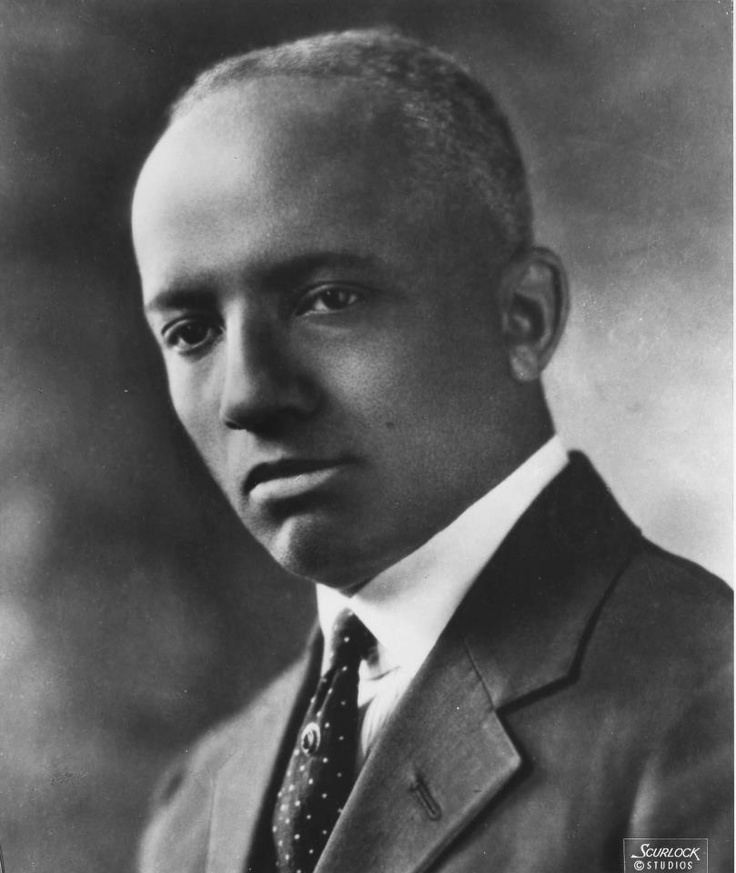
The McKenzie Branch is an integral part of the Tree built by Dr. Carter G. Woodson with the founding of ASALH in 1915. The work we do in all the Branches of ASALH is to honor the legacy of Dr. Woodson by providing rich programs of substance and content to keep alive the enduring important work of Dr. Carter G. Woodson and the mission of ASALH.
Our Branch received two powerful nominations from Dr. Stephanie Boddie, Assistant Professor of Church and Community Ministries at Baylor University and Dr. Artie Travis, Vice President for Student Affairs, Frostburg State University in Frostburg Maryland. Thank you Dr. Boddie and Dr. Travis for your respective nominations for our Branch.
Sincerely, Ronald Brooks Saunders President Dr. Edna B. McKenzie Branch Association for the Study of African American Life and History
Congratulations to the Dr. Edna B. McKenzie Branch of ASALH!
The branch structure of ASALH reflects Carter G. Woodson’s belief that our mission, to create and disseminate knowledge about Black history, could not be realized solely by academics. He envisioned branches as a means of extending ASALH’s reach across the country and beyond. Branches collect primary materials about Black History to celebrate national and local African American achievers and local and national happenings. Invitations are extended to members and to the public to participate in theme-based events, programs and activities. Branches attend monthly membership meetings, support Annual Meeting and Conferences, and other National initiatives.
You Never Know: External Contribution Award May 2022
Ronald B. Saunders, President of the Dr. Edna B McKenzie Branch of ASALH: Recognition from Frostburg State University
Ronald B. Saunders, President of the Edna B McKenzie Branch of ASALH was recently awarded the Inaugural Class of Vice Presidents “You Never Know” at Frostburg State University. “It is a distinct honor and privilege to receive such prestigious recognition. On behalf of the Dr. Edna B. McKenzie Branch of ASALH, we have welcomed Frostburg State University’s partnership and collaboration. I would be remiss not to acknowledge fellow members and executive officers of ASALH who have contributed to educational efforts on your campus as well.”
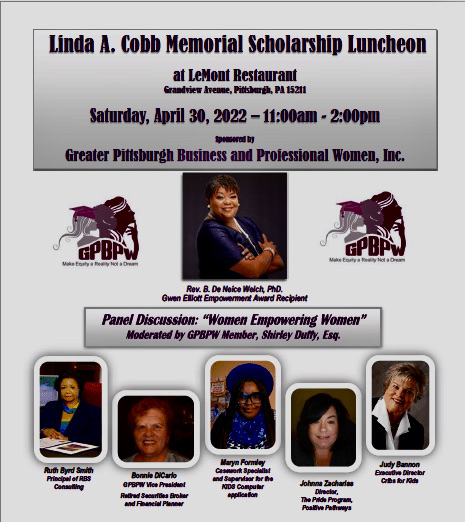
First Gwen Elliot Women’s Empowerment Award Recipient April 2022
Rev. B. De Neise Welch, PhD and Chaplain of the Dr. Edna B McKenzie Branch of ASALH
Congratulation to Rev. B. De Neise Welch, PhD and Chaplain of the Dr. Edna B McKenzie Branch of ASALH!
Out of 6 nominees Rev. Dr. Welch stood out. The committee voted unanimously to select her as our first awardee. She represents the mission and goals of our organization as well as embodies the essence of the woman in which our award is named.1st annual Gwen Elliott Empowerment Award. The recipient of this award was chosen based on the following criteria:
A woman who currently lives and/or works in the greater Pittsburgh area and has improved services or conditions for women within her profession, community, or public through service. A woman, who has demonstrated a willingness to serve and assist other women in their personal and professional development and contributed to the successes of others as well as her own. A woman leader, who has empowered other women to excel through education, career development, the arts, or entrepreneurship. A woman, who has inspired other women through her acts of kindness and generosity.
The money raised from this annual event is used to provide at least 2 scholarship with a minimum of $500 to a female high school senior who is entering her freshman year in college or an adult woman returning to college or in a program to advance her career. This year we were able to give two $1,000 scholarships to two high school seniors entering their freshman year of college.
Rev. Dr. John Welch, Pastor, Scholar, Author, Speaker, and Thought Leader
Rev. Dr. Welch will present his seminal work, “The Intersection of Racism, Religion and Mental Health in Clinical Care.” This timely keynote will explore the following:
“Stigmatized groups and particularly African Americans have been victims of chronic racialized trauma for centuries resulting from a variety of social determinants. This trauma has had negative health implications not excluding mental health challenges leading to complex patient/provider interactions and palliative therapies often unaddressed.”
Program Objectives
How racialized trauma affects African American patients’ health (including mental health) and interactions with healthcare providers
How religious and spiritual beliefs affect African American patients’ seeking/not-seeking mental healthcare
How religious/faith institutions have themselves perpetrated and perpetuated racism
How religious beliefs influence Black patients’ healthcare decisions and interactions with healthcare providers
How clinicians need to disentangle a patient’s response to racism from her/his religious responses when that clinician is seeking to understand a patient’s decision making”
Presenter Biography
Rev. Dr. John C. Welch comes with a wide variety of experience in corporate, ecclesial, and higher education environments. Most recently, Dr.Welch spent almost 14-years as Vice
President for Student Services, Community Engagement and Dean of Students at Pittsburgh Theological Seminary where he oversaw the administration of over $1 million in annual student grants and scholarships. Dr. Welch also led seminary students in cross-cultural, socio-political engagement opportunities in the Caribbean, Mexico, Colombia, and South Africa with the hope of expanding student global awareness and improving cultural competence.
Beyond this work, John recently completed a 5-year strategic business plan for a faith-based nonprofit, conducted seminars and trainings to church leaders, physicians, nurses, and other healthcare professionals in the areas of ethics, burnout, moral distress, long term care,implicit bias, and institutional racism.
John has served as an adjunct professor of Business Ethics at the University of Pittsburgh’s Katz Graduate School of Business and the University of Pittsburgh’s Consortium Ethics Program as well as an adjunct professor of Theology at Carlow University. Currently, he sits on the Ethics Committees for major health networks and has offered his expertise in response to Covid-19 infections by designing engagement strategies to low-income communities of color and other marginalized populations including immigrants and LGBTQ, addressing vaccination hesitancy andcommunity spread.
Furthermore, John has led several nonprofit boards and currently is Chair of the Board of Directors for the Gamaliel Network, an international organization specializing in faith-based community organizing. Additionally, John has over 22-years of experience as a consultant in the field of Information Technology, 27-years in ordained ministry serving Presbyterian and Baptist congregations.
A native of Pittsburgh, John holds a Bachelor of Science Degree in Chemical Engineering & Economics, a Master of Divinity degree, and a PhD in Healthcare Ethics.
“For women of color, contending as they have with systemic racism, social injustice, and the right to control their own bodies, ensuring reproductive justice has been an urgent need for generations.”
“The novel coronavirus, or COVID-19, is a major health crisis across the globe. In the United States, and African Americans have been disproportionately impacted in terms of infections and deaths.”
On April 26, 2022, Harvard President Larry Bacow released the Report of the Committee on Harvard & the Legacy of Slavery, accepted the committee’s recommendations in full, and announced a historic commitment of $100 million to fund their implementation.
This short film offers an introduction to the first phase of the initiative’s work—the history—and is intended to be presented in the context of the committee’s recommendations for action.
Slavery in New England began when early colonists enslaved and sold Indigenous people, dispossessing them from the land.
“Harvard was important to the region’s politics, society, and economy, and as slavery formed the basis of New England’s economic life, so it shaped Harvard.“
“There’s no separation from the world. There’s no place outside of history.“
Princeton University, founded as the College of New Jersey in 1746, exemplifies the central paradox of American history. From the start, liberty and slavery were intertwined.
The Princeton & Slavery Project investigates the University’s involvement with the institution of slavery. It explores the slave-holding practices of Princeton’s early trustees and faculty members, considers the impact of donations derived from the profits of slave labor, and looks at the broader culture of slavery in the state of New Jersey, which did not fully abolish slavery until 1865.
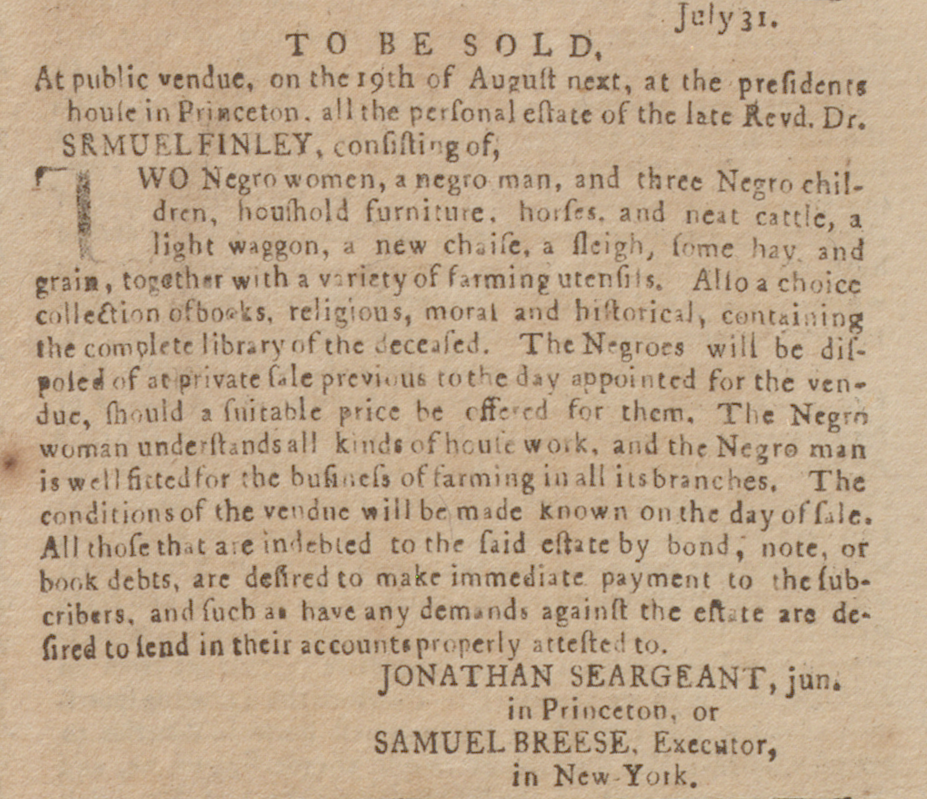
Local Advertisement
Two Women, a Man, and Three Children: An advertisement announcing the estate sale of President Samuel Finley, held at the President’s House on campus. July 31, 1776.
Drawing on papers written by students in a seminar Professor Eric Foner directed in the spring of 2015 and another directed by Thai Jones in the spring of 2016, all of which will soon be posted on this website, as well as Professor Foner’s research and relevant secondary sources. This report summarizes Columbia’s connections with slavery and with antislavery movements from the founding of King’s College to the end of the Civil War.
Pulitzer Prize-winning History Professor Eric Foner: Preliminary Report
This report summarizes Columbia’s connections with slavery and with antislavery movements from the founding of King’s College to the end of the Civil War. Significant gaps remain in our knowledge, and investigations into the subject, as well as into the racial history of the university after 1865, will continue.
New research from an MIT history class scholars and administrators is designed to examine the legacy of slavery in relationship to the university. Findings show founder William Barton Rogers possessed enslaved persons in his Virginia household until the early 1850s before founding MIT.
“Our founder was a slave owner,” says Craig Steven Wilder
Barton L. Weller Professor of History at MIT and a leading expert on the links between universities and slavery. Given how often such institutions drew personnel and material support from wealthy families that had profited from slavery, “people shouldn’t be surprised that MIT has these connections,” Wilder notes.
Milli Mickle, member of the Dr. Edna B Mckenzie ASALH branch, is exhibiting a painting in the Women of Visions exhibit called the “Future Visions” at the Carnegie Museum. The exhibit runs from May 28 to June 12. The Carnegie Museum is located at 4400 Forbes Avenue, Pittsburgh Pa. 15213.
Women of Visions, Inc. is a historic collective of African American women visual artists in Pittsburgh and a contemporary organization of artists supporting the community and each other through exhibitions, education, mentorship, and professional development.
Note this is the first time in Carnegie’s 126 year history that there has ever been an exhibit by a collective of Black female artists. These women are among the best painters in the world and we have a rare opportunity to avail ourselves of their magnificent art.
A public and free celebration for the exhibition, Future Vision: Women of Visions, is scheduled for June 2 from 6-9 PM in the Carnegie Museum of Art Hall of Sculpture.
Milli Mickle is a professor of English at Penn State University, Greater Allegheny Campus located in McKeesport Pa.
Women of Visions: The artwork and experiences of 22 women on display
See the University Art Gallery’s (UAG) longest-running Black women’s exhibit through the eyes of Pitt student and film, sociology and Africana studies triple major, Tierney Washington, as she explores the artwork in Frick Fine Arts accompanied by Women of Visions President, Christine Bethea, and the UAG Director, Sylvia Rhor Samaniego.
Join Reverend Dr. Judith C. Moore, Founder of Sisters Saving Ourselves, Now and Convener of Black Women Roundtable, Pittsburgh/MonValley for a moderated discussion to celebrate and honor Harriet Tubman’s bicentennial anniversary from 1822-2022. Learn how academic scholars, key stakeholders and descendants of Harriet Tubman are working collectively to build upon her legacy in American history as a Black woman.
Rita Daniels a direct descendant of Ms. Harriet Tubman, is President & Founder of The HarrietTubman Learning Center (HTLC). Mrs. Daniels will discuss the topic, “Keep Going! Why the Harriet Tubman Learning Center is important.”
Patrick McShea is the Manager of Museum Educational Loan Program, from the Carnegie Museum of Natural History Education Division. Mr. McShea will discuss Harriet Tubman’s role as a naturalist.
Kara Whitfield, President and Maxine Engram, a Past President of the Harriet Tubman Guild of Pittsburgh will discuss their organization’s role in Allegheny County.
From Carnegie Mellon University’s Department of History in the Dietrich College of Humanities and Social Sciences, we have Dr. Edda L. Fields Black, an Associate Professor who will contribute to the discussion of Ms. Tubman.
Finally, we will hear the presentation entitled, “The Incredible Life and Legacy of Harriet Tubman,” by Ranger Angela Crenshaw from the Maryland Department of Natural Resources.
On behalf of the officers of the Dr. Edna B. McKenzie Branch, Association for the Study of African American Life and History, I wish all mothers a spirit filled Happy Mothers Day.
Strong mothers, women and girls had to use all of their ingenuity. strength, and intelligence to navigate and survive the dreaded Middle Passage to the Americas. The mothers, women and girls aboard those horrible wicked slave ships and enslaved on Antebellum Plantations and throughout the Thirteen Colonies didn’t have a manual on life that advised them on how to survive in a sweltering sea of colonization.
These mothers knew there would be a much brighter day as they were guided by the spirit and love of their ancestors.
Indigenous women, mothers of the Americas in concert with African women and European women were strong women who passed on a great legacy of enduring hard work to their respective daughters.
Mothers, women and girls in the Thirteen Colonies had to perform back breaking difficult jobs, tasks and chores. However, when the U. S Constitution was ratified, women were not included as equals in the original compact and Africans were legally enshrined as Three Fifths of a person.
Indigenous tribe women, African free and enslaved women were constantly under siege throughout the Thirteen Colonies but still they would persevere.
Strong mothers are in essence a true gift to the world and so on this Mother’s Day and everyday let us honor and praise the work of all mothers.
Ronald B. Saunders, President Dr. Edna B. McKenzie Branch ASALH
Keynote Speaker: Dr. Mark Anthony Neal, James B. Duke Distinguished Professor of African & African-American Studies
Dr. Neal is the James B. Duke Distinguished Professor of African & African-American Studies and Professor of English, and the author of the new book Black Ephemera: The Crisis and Challenge of the Musical Archive (NYU, March 2022). Dr. Neal is also the author of five books, including What the Music Said: Black Popular Music and Public Culture; Soul Babies: Black Popular Culture; the Post-Soul Aesthetic and Looking for Leroy: Illegible Black Masculinities; and That’s The Joint!: The Hip-Hop Studies Reader (co-edited with Murray Forman).
Presentation Title: “Hello Stranger”: Fugitive Analogs and Maroon Interiorities in the Black Digital Archive
“Foregrounding the archival work of the Black Audio Film Collective and LA Rebellion, the filmmakers Barry Jenkins and Denzel Washington, playwright August Wilson, and the music of Dinah Washington and Jimmy Scott, this talk will explore the continued reliance and presence of analog archives in the so-called Black Digital Era. These presences, which might be thought of as hauntings, function as fugitive and maroon archives. “
ASALH 2022 Annual Meeting & Virtual Conference: September 29 – October 1
The theme for 2022 focuses on the importance of Black Health and Wellness. This theme acknowledges the various ways health and wellness can be described, including, but not limited, to medical health, mental health, nutrition, body positivity, financial wellness, creative arts, and physical activity. Additionally, it is important to note the intersection between financial wellness and medical and mental wellbeing.
The submission deadlines for proposals are as follows:
Early Bird Submissions will be accepted via All Academic until March 18, 2022 at 11:59 p.m. (EST).
Conditional acceptance responses to Early Bird submissions will be sent out by April 18, 2022 at 11:59 p.m. (EST).
After this date, the committee will accept all submissions until the deadline of April 30, 2022 at 11:59 p.m. (EST).
The conference will be held October 13-15, 2022, at Lycoming College in Williamsport, Pennsylvania. For more information, please contact Dr. Andrew Simpson, Associate Professor of History, Duquesne University at simpson4@duq.edu.